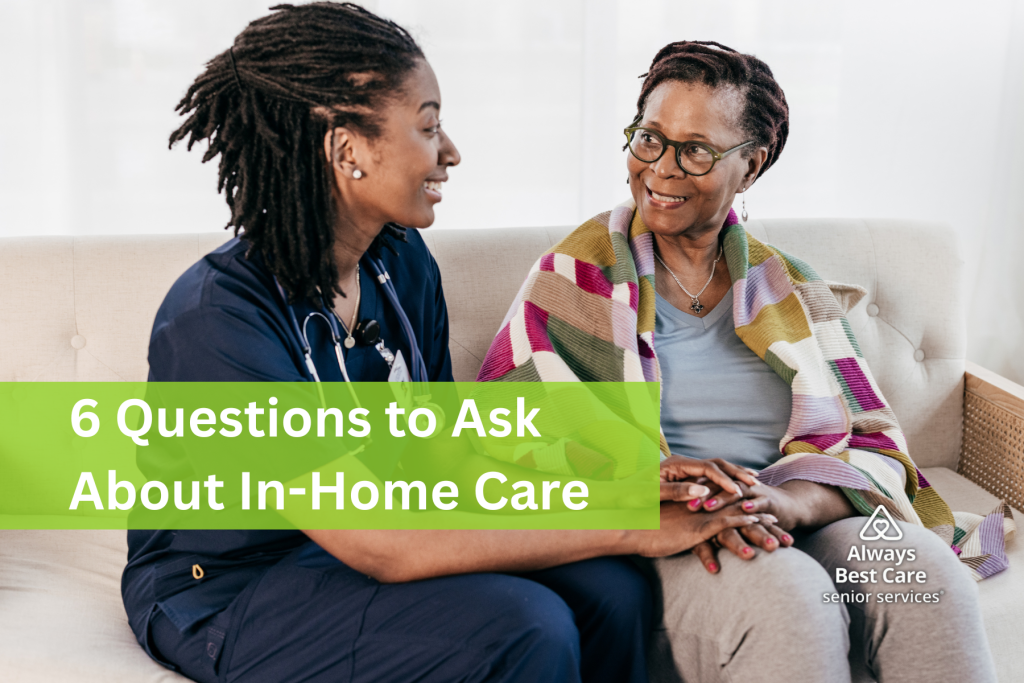
When families begin exploring in-home care, the instinct is often to move quickly. A hospital discharge is approaching. A fall just happened. Or the reality of decline has finally set in. This North Carolina guide to in-home care will walk you through the important questions to ask so that you make the best decision for you and your loved ones.
The difference between a smooth care experience and a revolving door of caregivers often comes down to one thing: the questions you ask upfront.
Speed matters. But precision matters more.
Here are 6 non-negotiables every family, discharge planner, or professional referral source should be asking.
1. Are You Licensed, Insured, and Accountable?
This is foundational, yet often overlooked.
A reputable agency should be licensed in the state, fully insured, and responsible for their caregivers as employees, not independent contractors. This ensures compliance, protection, and oversight.
If a company hesitates here, that is not a minor issue. That is a liability.
2. How Do You Screen and Train Your Caregivers?
Your caregiver is not just helping with tasks. They are becoming part of someone’s daily life.
Ask:
- Are caregivers background checked and drug tested?
- What ongoing training is required?
- Do you provide specialized training for dementia or chronic conditions?
The best agencies invest heavily in training because they understand that consistency and competence drive outcomes.
3. What Happens When Coverage Breaks?
Let’s be candid. Caregiver call-outs happen. The question is not if. It is how your agency responds.
Do they have:
- A deep bench of caregivers?
- A structured on-call system?
- The ability to replace a caregiver quickly without disrupting care?
If the answer is unclear, families will feel that instability almost immediately.
4. How Flexible Is Your Care Model?
Care needs change. Sometimes overnight.
Look for providers that offer:
- No hourly minimums
- Care ranging from short visits to 24/7 support
- The ability to adjust schedules quickly
Flexibility is not a luxury in home care. It is operational excellence.
5. How Do You Communicate With Families and Professionals?
Silence creates anxiety.
A strong agency provides:
- Proactive updates
- Clear points of contact
- Coordination with hospitals, rehab facilities, and physicians
For referral partners, this is especially critical. You need to trust that your patient or client is being managed professionally after discharge.
6. Can You Support Us Beyond Just Caregiving?
This is where elite providers separate themselves.
In-home care is often just one piece of a much larger journey. Families may need guidance on:
- Senior living options
- Memory care transitions
- Long-term planning
An agency that can navigate these conversations becomes a strategic partner, not just a vendor.
7. The Bottom Line
Hiring in-home care is not just about filling hours on a schedule. It is about building a reliable, professional support system around someone at a vulnerable time in their life.
The right questions will reveal very quickly whether an agency is built for that responsibility or simply participating in the market.
Guest post provided by Always Best Care, who has built their model around one principle: reliability at every touchpoint.
Always Best Care provides personalized in-home care from one hour to 24/7 support, with trained and insured caregivers, customized care plans, and no hourly minimums . Their team is available 24/7, ensuring that when schedules shift or needs change, families are never left without support.
Beyond caregiving, they serve as trusted advisors offering senior living placement, community navigation, and hands-on guidance through every stage of aging.
If you are planning ahead or facing an immediate need, the Always Best Care team is ready to step in with clarity and confidence.


